Money Abroad
Pension and social contributions are the easiest thing to lose track of
Working across borders scatters your future entitlements between systems that do not talk to each other, and reassembling the record decades later is much harder than keeping it as you go.
By Arjun Nair3 min read
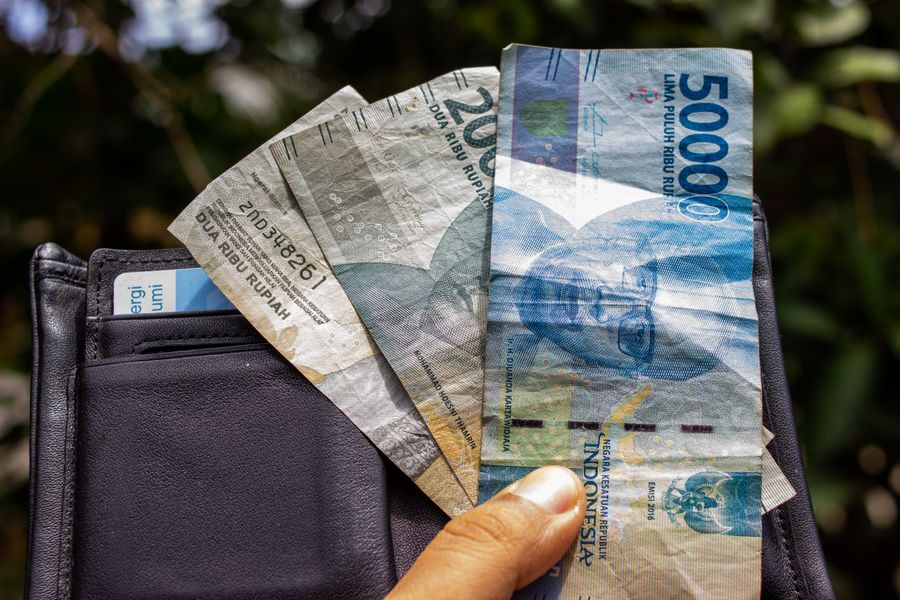
A career in pieces
Somebody who works in one country their whole life accumulates a single record in a single system, and it looks after itself. Somebody who works in three ends up with three partial records, held by three institutions under three sets of rules, each of which knows only about its own fragment.
The problem is not usually that entitlements are lost. It is that they are hard to find, hard to combine and easy to forget about entirely, especially when the period concerned was short and long ago. Systems that pay out decades later have no way to find you if you have moved twice since.
This piece describes the shape of that problem only. What you are entitled to, and what any arrangement between countries does for you, depends on the countries and on your own history, and is a matter for the institutions concerned and for qualified advice.
Contributions and entitlement are not the same thing
A common assumption is that paying into a system automatically produces a proportional benefit from it. Many state systems have qualifying conditions — minimum periods, minimum contributions, or rules about when contributions were made — and a short period may not by itself produce an entitlement.
This is one reason international arrangements exist between countries: to allow periods completed in different systems to be taken into account when qualifying conditions are assessed. Such arrangements are specific to pairs or groups of countries, they are technical, and whether one applies to you is not something to guess at.
It is worth finding out, at the time you start work somewhere, what system you are contributing to and what the general qualifying structure is. Not to plan around a number, which would be foolish this far out, but so that you know the record exists.
Workplace and private arrangements move differently
Alongside state systems there are employer schemes and private savings, and these behave differently again. Some can be left where they are and drawn from later, some can be transferred, and some become awkward when the holder becomes resident in another country, either because the provider will not serve non-residents or because the tax treatment changes.
Transferring such arrangements between countries is a specialist matter with real tax consequences and, in some markets, a history of poor advice and high charges. It is precisely the sort of decision to take slowly, with regulated advice, and with scepticism towards anybody who approaches you offering it.
The safe default in most cases is to do nothing hastily, keep the paperwork, and get proper advice before moving anything. A scheme left where it is can generally be dealt with later; a transfer made on bad advice usually cannot be undone at all.
Keeping a record that will still be legible in thirty years
The habit that solves most of this is dull. For each country where you have worked, keep a single record: the identifying number you were given in that system, the name and contact details of the institution, the dates you worked, the employers, and any annual statement you were sent.
Keep it somewhere that will survive several house moves and several changes of email address, and tell somebody in your family where it is. Institutions that owe you money in forty years will try to write to you, and the address they hold is the one from the year you left.
Where a system offers an online account, register for it while you are still resident and still have the local phone number and address, because registering from abroad afterwards can be genuinely difficult.
Updating the record as you move
The other half of the habit is telling each institution where you have gone. Systems that hold future entitlements generally have a process for non-resident members, and keeping an address current with them is a five-minute task that prevents a decade-long disconnection.
It is also worth revisiting the picture whenever you change country, because the interaction between systems changes with the pair of countries involved. Something that could be left dormant safely in one situation may need attention in another.
None of this is urgent in the way a visa deadline is urgent, which is exactly why it gets neglected. The cost of neglect is invisible for years and then substantial, and the cure is a folder and an hour once a year.
Common questions
Will short periods of contributions in several countries count for anything?
Possibly, and it depends on the countries involved and on whether an arrangement exists between them allowing periods to be aggregated. Contact the institutions concerned and take advice rather than assuming that short periods are worthless.
Should I transfer a pension when I move?
Not without regulated advice specific to both countries, because the tax and charging consequences can be significant and irreversible. Be particularly wary of unsolicited offers to move retirement savings across borders.
What if I have lost track of an old scheme?
Many countries operate tracing services for lost pensions and contribution records, and employers and former providers can often help. Start with the institution that administers the system in that country, and expect it to take time.
Consumer editor, Globetrotter Talks
Arjun writes the explanatory pieces on arriving, visas & paperwork, money abroad and is unreasonably interested in the detail nobody else checks.