Arriving
The first fortnight is an administrative sprint and it should be planned like one
Arriving for a long stay front-loads almost every piece of officialdom you will face, and treating those two weeks as a settling-in period is why so many people lose a month.
By Sofia Almeida4 min read
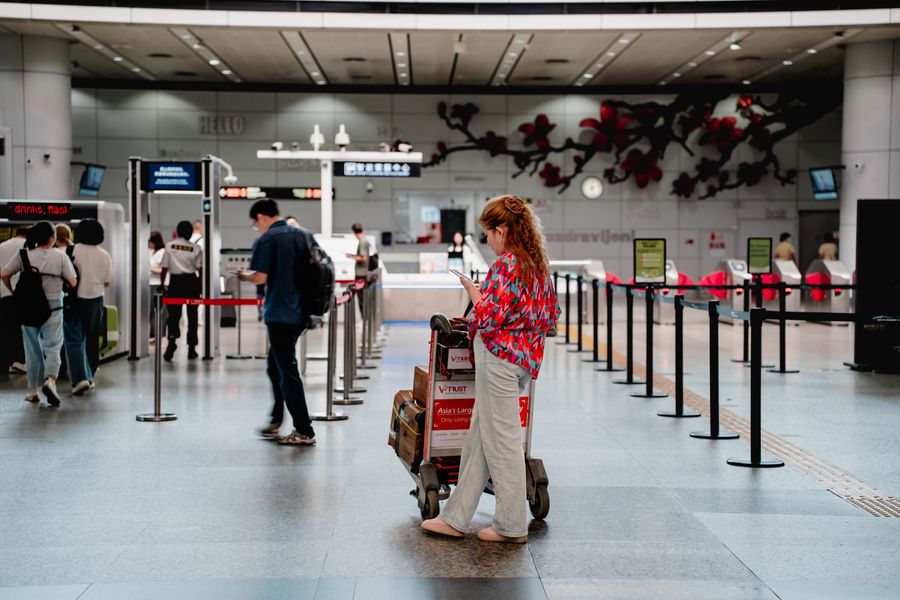
The first two weeks are not the holiday part
People who arrive somewhere for a year tend to give themselves a soft landing. They plan a fortnight of walking around, finding a café, letting the place come into focus, and then they intend to start on the practical business once the jet lag has worn off. It is an understandable instinct and it is usually the wrong one, because the practical business is a chain rather than a list, and a chain takes calendar time rather than effort.
What makes a long stay different from a trip is that almost nothing you need can be bought at a counter. An address, a local number, a bank account, a registration with whichever office records residents, cover for healthcare — each of these is issued by an institution that works to its own timetable, and several of them will want to see something that one of the others has to issue first.
The result is that the two weeks you spend acclimatising are two weeks in which no clock has started. That is the cost, and it is invisible until later.
Almost everything queues behind an address
In most places, the single most useful thing a newcomer can own is a fixed address that somebody official is willing to accept. It is what a bank asks for, it is what a registration office wants, it is frequently what a phone contract is checked against, and it is the thing a short-term rental is least able to give you.
This is why the accommodation you arrive into matters out of proportion to how long you stay in it. A room booked by the week may be perfectly comfortable and completely useless as a piece of evidence, and you can lose a fortnight discovering that. It is worth asking, before you book anything, whether the person letting it will provide a document confirming that you live there, and what that document looks like.
None of this is universal. Some countries barely care where you live, some require you to report a move within a short window, and a few treat the address as the hinge of the entire system. The only way to know which kind of place you have arrived in is to read the current official guidance for that country, in its own words, before you go.
The order matters more than the speed
A useful exercise before departure is to write down every piece of officialdom you expect to need, and then draw an arrow from each one to whatever it depends on. The arrows are the plan. Once you can see that the bank wants the registration, and the registration wants the tenancy, and the tenancy wants a deposit that has to be transferred from an account you don’t yet have, the sequence stops being a matter of preference.
Some of those dependencies have a workaround and some do not. A landlord may accept a transfer from a foreign account; a bank may open a limited account on a passport alone and upgrade it later. But you can’t find the workarounds while standing at the counter, and you certainly can’t find them in a language you are still learning.
Where the chain has a genuine deadlock — and it happens — the answer is usually a person rather than a document. A relocation adviser, an immigration lawyer or simply an employer’s human resources department will have seen the same knot before.
Appointments are the real currency
The part almost nobody budgets for is the appointment itself. Offices that deal with new residents are frequently booked out well in advance, and in a city with a large incoming population the wait can be the single longest item in the whole process. That waiting time is dead time you cannot compress by being organised.
So the first working day is better spent finding out how appointments are obtained than doing anything else. Sometimes they are released online at a particular hour; sometimes there is a queue in person from early morning; sometimes an intermediary can book on your behalf. Whatever the mechanism is, learning it early converts a month of waiting into a week.
Book the earliest thing you can get even if you are not sure you have every paper. A slot can be cancelled. A slot you never booked cannot be brought forward.
What a well-spent fortnight actually looks like
The shape that works is unglamorous. The first few days go on the address and the phone number, because they unlock the rest. The middle of the first week goes on booking whatever appointments exist, in the order the chain demands. The second week goes on the appointments themselves, on the bank, and on collecting the documents each visit generates, because the receipt from one office is very often the evidence required by the next.
Keep every piece of paper you are handed, including the ones that look like nothing. Photograph them as you go, and keep the photographs somewhere you can reach from a phone. This sounds fussy until the afternoon a clerk asks for the stamped slip you were given three weeks earlier and you have it.
And accept that the city itself will still be there in a month. The walking around, the café, the slow focusing — none of that expires. The appointment slot does.
Common questions
Should I really do all of this before I explore at all?
Not literally, and a fortnight of pure admin would be miserable. The point is that the time-sensitive items should be started in the first days rather than the third week, because most of the delay is waiting rather than doing, and waiting can happen while you explore.
How much can be done from home in advance?
That varies enormously by country and by the permission you are travelling on, and some of it genuinely cannot be started until you are physically present. Check the official government source for the country you are going to, and if your situation is unusual, pay someone qualified to look at it.
What if I get the order wrong?
Usually nothing is lost except time, and you go back a step. The exception is anything with a legal deadline attached, such as a requirement to report your arrival within a set period — those are worth identifying before you fly and treating as fixed points.
Staff writer, Globetrotter Talks
Sofia joined to cover arriving, visas & paperwork, money abroad and stayed for the awkward questions and prefers a plain explanation to a clever one.