Money Abroad
How a country pays for things is a habit as much as a technology
Cash, cards, instant bank transfers and app-based systems dominate in different places for historical reasons, and using the local default is cheaper and simpler than importing your own.
By Manish Trivedi3 min read
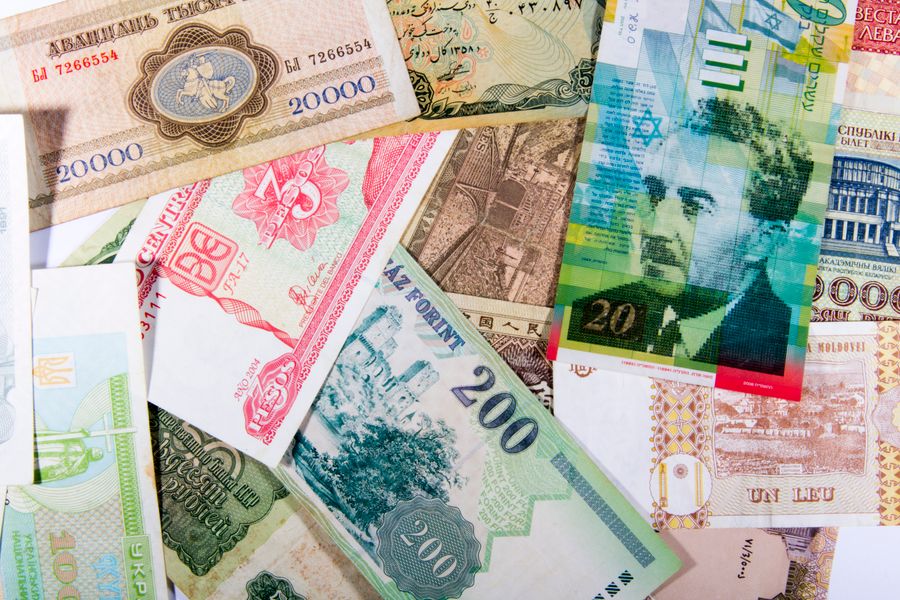
Payment cultures diverge more than they converge
It is tempting to assume that payment methods are converging worldwide and that a card works everywhere. In practice countries have settled into quite different habits, and those habits are shaped by history, by the structure of the banking sector and by regulation rather than by which technology is newest.
Some societies remain substantially cash-based for everyday transactions, with a strong preference for it in small businesses. Some have all but abandoned cash. Some run on instant bank-to-bank transfers initiated from a phone, a system that is normal there and unheard of a border away. Some are dominated by domestic card schemes that foreign cards do not join.
Knowing which kind of country you have moved to is genuinely practical information, and it is the sort of thing that is rarely written down anywhere because everyone who lives there simply knows it. The quickest way to find out is to stand behind three people in a queue and watch what they hand over, which tells you more than any amount of reading about payment infrastructure.
The foreign card problem
A card issued abroad can fail in ways that have nothing to do with funds. It may not be part of the local scheme, it may be rejected by machines expecting a domestic network, it may trigger fraud controls because of the pattern of use, or it may work while quietly applying a conversion margin on every transaction.
For a stay of months, that margin alone is an argument for a local card. So is the ordinary friction of being the person at the counter whose payment does not go through, which is a small humiliation that repeats.
The bridging strategy that works is to arrive with two cards from different networks, keep some local cash from the outset, and get onto the domestic system as soon as the account exists. Tell your card issuer where you are going as well, since a sudden run of foreign transactions is exactly the pattern automated fraud systems are built to stop, and unblocking a card from abroad is a tedious hour on an expensive telephone line.
Bills, rent and recurring payments
Recurring payments are where local convention matters most, because landlords and utilities generally expect the domestic mechanism and may not accommodate anything else. In some countries a direct debit arrangement is standard and refusing it costs you a discount; in others a transfer initiated by the payer each month is the norm and automatic collection is regarded with suspicion.
Understand what happens if a payment fails, too, since the consequences differ. Some systems charge a fee and retry, some treat a failed collection as a missed payment with consequences for your record, and some notify the counterparty immediately.
A quiet trap for newcomers is the payment reference. Several countries use a structured reference number that must be entered exactly, and a transfer sent without it can sit unallocated for weeks while the recipient insists you have not paid.
Cash still does specific jobs
Even in largely cashless countries, cash retains roles: markets, small traders, tips where they are customary, certain public offices, and situations where a card network is down. Carrying a modest amount is sensible for reasons of practicality rather than nostalgia.
Where cash remains dominant, there are habits worth learning early. Which denominations shops can break, where cash machines are and what they charge, whether there is a norm about exact change, and how people carry money safely in that particular place.
Be aware also that many countries limit large cash transactions by law, and that paying for something substantial in cash can be restricted or require documentation. That is a rule to check rather than to test.
Adopt the local default and stop thinking about it
The general principle is that the local default is the one every counterparty is set up for, is usually the cheapest, and removes an entire category of small daily friction. Fighting it in order to keep using an arrangement from home is a slow tax on your attention as much as on your money.
That said, keep one route that does not depend on the local system. A working foreign card, or a small amount of cash in a familiar currency, is what gets you through the week when a local account is frozen for a review or a card is swallowed by a machine.
And expect the habits to change. Payment systems in many countries are being reshaped quickly by regulation and by domestic instant-transfer schemes, so the advice you were given when you arrived may be out of date by the time you are settled.
Common questions
Why do some shops refuse cards for small amounts?
Card acceptance carries a cost per transaction that can be significant on a small sale, and in some countries minimum-spend rules are common and lawful. In others such minimums are prohibited, which is why practice varies so much between neighbouring markets.
Is it worth getting a domestic card as well as a local account?
Usually yes, because domestic schemes are accepted where international ones are not, and the conversion margin disappears. Ask what the account includes, since a basic account sometimes comes with a card that has limited acceptance.
How much cash should I carry day to day?
Enough to complete a normal day if a card fails, which depends entirely on how cash-oriented the country is. In a heavily cashless place that may be very little; in a cash-dominant one it is a real consideration alongside how safely money is carried locally.
Reporter, Globetrotter Talks
Manish covers arriving, visas & paperwork, money abroad and the questions readers actually send in and is unreasonably interested in the detail nobody else checks.